Plumber Washington DC Pros is a free referral line, not a plumbing business, and it sends out no crews. Call the number on this page, describe what is going wrong, and you are routed to an independent local plumber serving the District or a nearby Maryland or Virginia community. Pricing, scheduling and the repair itself are all handled by that plumber.
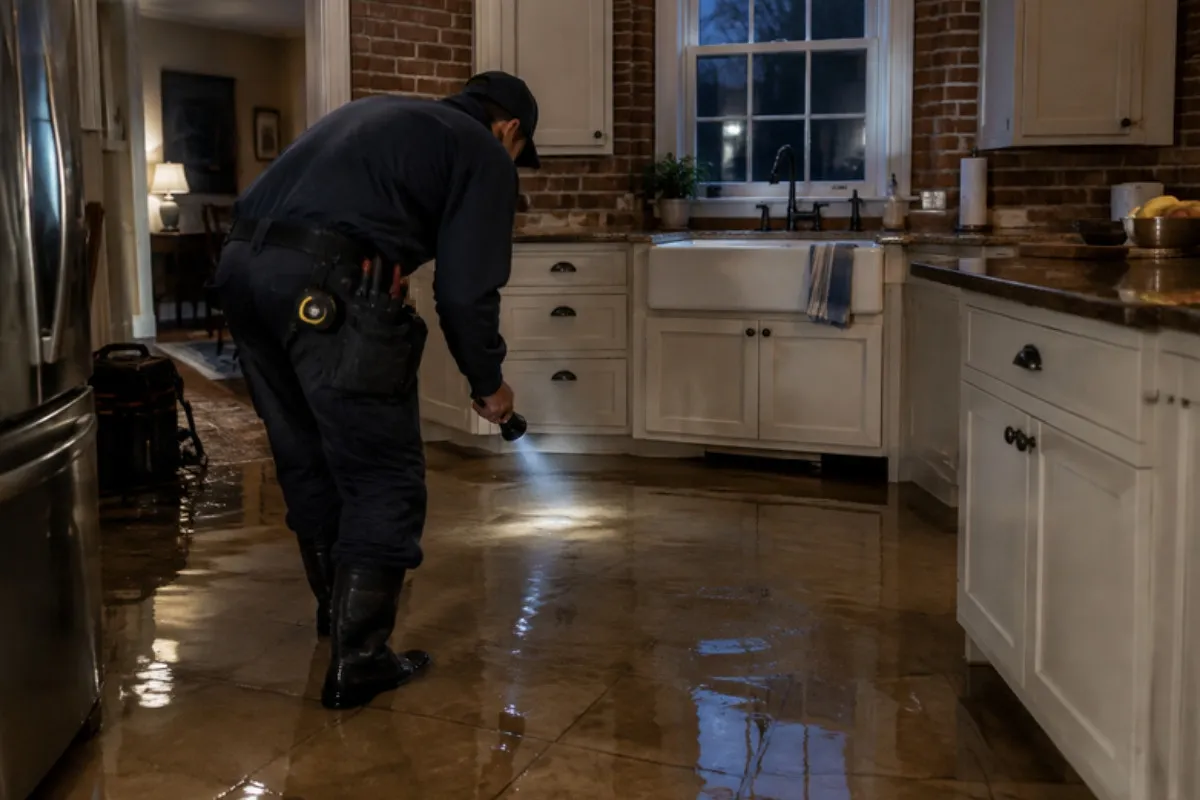
Plumbing services in Washington
How a call through this line works
The person who picks up is an independent plumber who accepts jobs in your part of the region. Plumber Washington DC Pros employs no plumbers and sets no prices. Everything about the work, from the quote to the invoice to the arrival window, is agreed directly between you and that plumber. Availability depends on how busy that plumber is, so no arrival time is promised here.
Callers ask about plumbing emergencies, stopped-up drains, damaged sewer laterals, water heater trouble, frozen and burst pipes, basement sump pumps, annual backflow testing and gas line work.
If water or gas is the emergency
When a pipe gives way, close the main shutoff valve for the house and keep clear of any electrical gear close to the water. A break or sewer overflow on the public side goes to DC Water's 24-Hour Command Center at 202-612-3400. Gas is different: if you smell it, walk out of the house first, then from a safe distance phone 911 and Washington Gas at 844-WASHGAS (844-927-4427), option 1.
Where District tap water comes from
DC Water distributes drinking water across the District, buying it already treated from the Washington Aqueduct. The Aqueduct pulls Potomac River water at intakes near Great Falls and Little Falls and runs it through the Dalecarlia and McMillan treatment plants. Chloramine, a pairing of chlorine and ammonia, disinfects it, except for a brief chlorine-only stretch each spring. Lime and caustic soda adjust the pH, and orthophosphate is added to limit corrosion inside pipes. DC Water calls the water moderately hard, usually around 70 to 120 ppm (3 to 9 grains per gallon) depending on season and location, and its annual report puts the average near 126 ppm, about 7 grains. That is enough to leave some scale in tank and tankless heaters over time, but it is a smaller concern here than in many parts of the country.
Public pipes, private pipes and permits
DC Water replaces the water service pipe that runs through public space, while replacing the stretch on private property is the owner's cost, though DC Water will coordinate that work. Its Lead Free DC effort offers several replacement programs aimed at swapping lead and galvanized-iron service lines for copper, a Service Line Inventory Map that shows what a given property has, and free lead testing; check with DC Water for current program terms. DC Water also notes that galvanized household piping can pick up lead left by an old lead service line and recommends replacing both. On the sewer side, about two-thirds of the District has separate sanitary and storm sewers, and roughly one-third relies on a combined system built before 1900, with flows treated at Blue Plains.
Plumbing and gas permits come from the DC Department of Buildings, and only a contractor holding a DC license for that trade can apply, with plumbing applications signed by a Master Plumber or Gas Fitter. DC Water's cross-connection control office oversees backflow assemblies at the building's service connection, which need a test every year with the report sent to that office.
Old rowhouses, basements and cold snaps
The median DC home dates to about 1957. Older areas such as Georgetown, Capitol Hill, Adams Morgan and Dupont Circle are full of rowhouses that can still carry galvanized supply pipe, cast iron drains, aging laterals or a lead service line. Basements are common, which makes sump pumps, floor drains and sewer backups ordinary service calls, and a heavy summer storm can push water back into low fixtures, especially in combined sewer areas. Winter nights below freezing threaten pipes in outside walls, crawlspaces and unheated rooms, along with hose bibs left connected.
Callers outside the District
The independent plumbers reached here also take calls in nearby Maryland and Virginia, including Arlington, Alexandria, Silver Spring, Bethesda, Rockville, Hyattsville and Falls Church. Water utilities and permit offices differ outside DC, and each town page covers its own. The complete list is on the service areas page.
Cities and towns we connect callers in
Arlington County
Alexandria City County
Fairfax County
Fairfax City County
Falls Church City County
Loudoun County
Prince William County
Manassas City County
Montgomery County
Prince George's County
Charles County
Common questions
Is Plumber Washington DC Pros a plumbing company?
Who pays to replace the water service pipe at my DC home?
What should I do if I smell gas?
Can I call from Arlington, Silver Spring or another nearby town?
Guides
Sources
- DC Water: Annual Water Quality Report (Consumer Confidence Report)
- DC Water: Drinking water quality FAQs (moderately hard, typically 70-120 ppm / 3-9 grains per gallon)
- DC Water: Lead FAQs (public-space vs private-property service pipe replacement)
- DC Water Annual Water Quality Report (24-Hour Command Center 202-612-3400)
- DC Water: Cross-connection control and backflow prevention FAQ
- DC Department of Buildings: Get a permit
- DC Water: Combined sewer system (sewer emergencies 202-612-3400)
- Washington, DC housing by year built (city-stats.com, Census ACS)
- Washington Gas: Contact us (emergency leak line 844-WASHGAS, option 1)
- Washington, D.C.: city overview and neighborhoods (Wikipedia)
- DC Water: Lead Free DC (service line replacement programs, inventory map, lead testing)
- DC Water: Galvanized plumbing FAQ
Last updated: