In most DC plumbing emergencies the fastest way to limit damage is to close the main water valve, which in many rowhouses and older homes sits in the basement near the front wall. A smell of gas comes first: leave the building before doing anything else. Once things are under control, call the number on this page to be connected with a local plumber in Washington, DC.
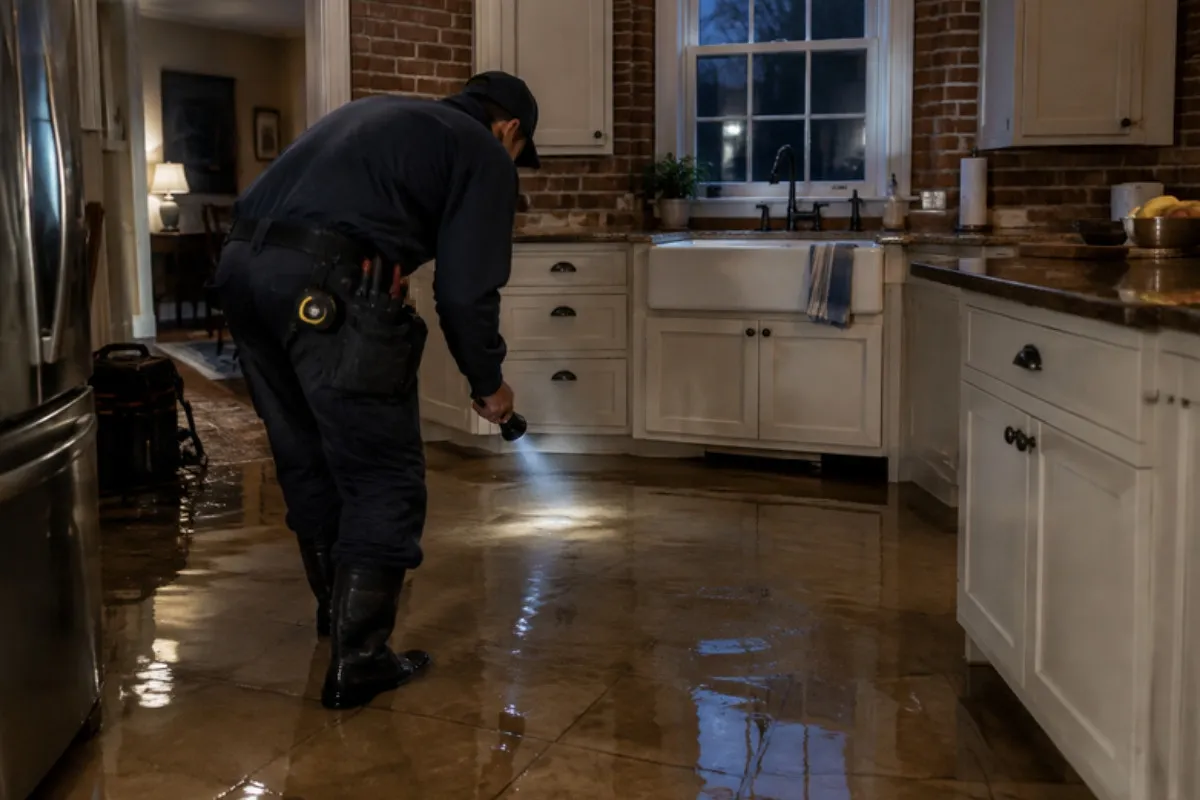
When it counts as an emergency
- A split pipe or failed supply hose soaking a ceiling, wall or floor
- Sewage or gray water coming up through a basement floor drain, toilet or tub
- A water heater leaking from the tank itself
- A pipe that froze in an exterior wall, crawlspace or unheated basement and is now leaking as it thaws
- No water in the house while the neighbors on your block have normal flow
A running toilet with a working shutoff, a dripping tap or one slow sink can wait for regular hours.
Gas smell: leave first
Do not touch light switches or appliances. Get everyone outside, then from a safe distance call 911 and Washington Gas at 844-WASHGAS (844-927-4427), option 1. A plumber can work on gas piping only after the utility has made the line safe.
Steps to take right away
- Find and close the main shutoff. In basements it is usually where the service pipe enters through the front foundation wall. Turn it clockwise until it stops.
- Turn off an electric water heater at the breaker if it is involved and the floor around the panel is dry.
- Open a low faucet to drain pressure out of the pipes.
- Take photos of the leak and any damage for the plumber and your insurer.
DC Water or a plumber?
DC Water runs the public water and sewer systems, and its 24-Hour Command Center takes water and sewer emergencies at 202-612-3400. Water bubbling up in the street, a main break, or a whole block losing service is a call for DC Water. A leak inside the house, a backup from your own drain line, or a broken pipe on your lot is usually a plumber's job. DC Water replaces the service pipe in public space, while the section on private property is the owner's responsibility.
What makes DC emergencies different
The median DC home was built in 1957, and rowhouses in neighborhoods such as Capitol Hill, Georgetown and Mount Pleasant can still have galvanized supply pipe and cast iron drains that fail without much warning. Roughly a third of the District is on a combined sewer system developed before 1900, so heavy summer storms can push water back into basement floor drains. Winter cold snaps add frozen and burst pipes along outside walls.
When you call
You will be connected with an independent local plumber who serves Washington, DC. Give the address, describe what is leaking or backing up, and say whether the main is closed. Ask how night, weekend and holiday visits are billed before anyone is sent out. Arrival times depend on the plumber's schedule and are not promised here.
Emergency Plumber questions from Washington homeowners
Who do I call about a water main break on my street in DC?
Where is the main water shutoff in a DC rowhouse?
What should I do if I smell gas?
Do emergency plumbing visits cost more?
Related plumbing services in Washington
Helpful guides
Emergency Plumber in nearby cities and towns
Arlington County
Alexandria City County
Fairfax County
Fairfax City County
Falls Church City County
Loudoun County
Prince William County
Manassas City County
Montgomery County
Prince George's County
Charles County
Sources
- DC Water Annual Water Quality Report (24-Hour Command Center 202-612-3400)
- DC Water: Lead FAQs (public-space vs private-property service pipe replacement)
- DC Water: Combined sewer system (sewer emergencies 202-612-3400)
- Washington, DC housing by year built (city-stats.com, Census ACS)
- Washington Gas: Contact us (emergency leak line 844-WASHGAS, option 1)
Last updated: