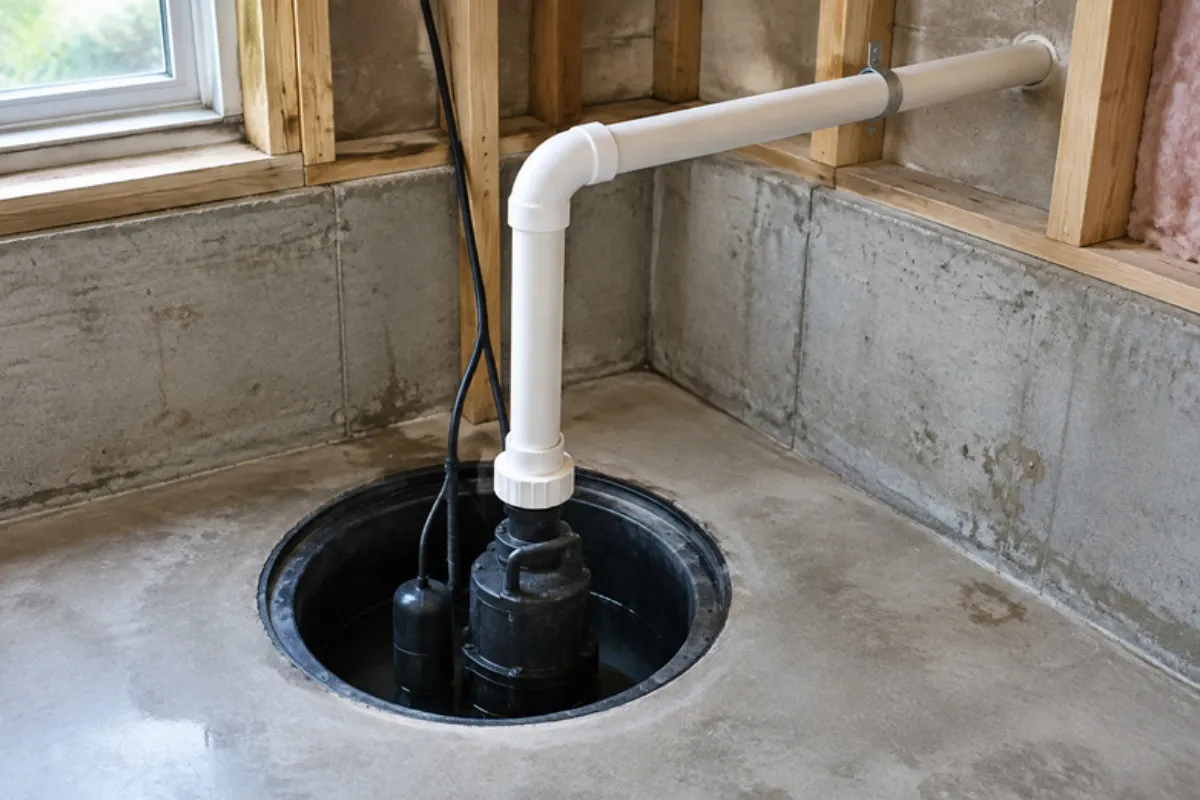
A sump pump that fails usually comes down to a stuck float switch, a burned-out motor, a clogged intake or a discharge line that is frozen or blocked. Because so many District homes have basements, a dead pump right before a summer storm can mean standing water within hours. Call the number on this page to be connected with a local plumber in Washington, DC who can test the pump and fix or replace it.
Why basements here depend on a working pump
Rowhouses and detached homes across the District often sit over full or partial basements, and plenty of them were built long before modern waterproofing. Groundwater rises after long rains and snowmelt, and the heavy thunderstorms that roll through in summer can push a lot of water against foundation walls in a short time. The pit and pump are the last line of defense, so a pump that has quietly stopped working is often discovered the hard way.
Common problems and what they point to
- Motor runs but the pit stays full: a clogged intake screen, a stuck check valve or a blocked discharge pipe.
- Pump turns on and off every few seconds: a float set too low, a failed check valve letting water fall back, or a pump too small for the inflow.
- Pump never starts: a tangled or jammed float, a tripped breaker or GFCI, or a motor at the end of its life.
- Loud grinding or rattling: debris in the impeller or worn bearings.
- Water backing up in winter: an outdoor discharge line that froze or was buried under ice.
Sump water versus sewer backups
A sump pump handles groundwater around the foundation. It does not stop sewage from coming up a floor drain. DC Water notes that roughly one-third of the District is on a combined sewer system dating to before 1900, where stormwater and wastewater share the same pipes, while the rest has separate sanitary and storm lines. In a hard storm, a basement floor drain can back up for reasons that have nothing to do with the pump. If dirty water is rising from a drain, call DC Water's 24-Hour Command Center at 202-612-3400, then ask a plumber about the lateral and a backwater valve.
Upgrades worth discussing
- A battery backup pump that keeps running when storms knock out power.
- A new check valve and a properly routed discharge that sends water away from the foundation, not into a neighbor's yard.
- A sealed pit lid to cut down on moisture and radon entering the basement.
- A high-water alarm so you hear about a failure before the carpet does.
What drives the price
Cost depends on whether the pump only needs a float or check valve, the type and horsepower of a replacement, pedestal versus submersible design, adding a backup system, and how much discharge piping has to be rerouted. Digging a new pit in a basement slab is a much larger job than swapping a pump in an existing one.
Sump Pump questions from Washington homeowners
How do I test my sump pump?
Can a sump pump stop sewage from backing up?
Do I need a battery backup?
Who do I call if the street sewer is overflowing?
Related plumbing services in Washington
Helpful guides
Sump Pumps in nearby cities and towns
Arlington County
Alexandria City County
Fairfax County
Fairfax City County
Falls Church City County
Loudoun County
Prince William County
Manassas City County
Montgomery County
Prince George's County
Charles County
Sources
Last updated: